

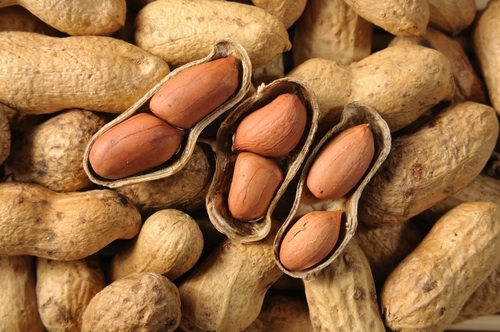
Exported to over 50 countries and uniquely available year-round owing to two primary harvest cycles (March and October).
Sourced exclusively from regions with naturally lower aflatoxin risk, strictly avoiding water spraying to prevent contamination.
In-house HPLC testing for B1 + B2 + G1 + G2, ensuring complete compliance with destination import standards.
Groundnuts, commonly known as peanuts, are one of the world's most widely consumed and economically significant legumes. First cultivated approximately 7,500 years ago in Peru, peanuts have since spread to every corner of the globe and become a critical source of protein, healthy fats, and micronutrients — particularly in developing economies across Africa and Asia. Today, China and India are the dominant producers, while Senegal, the USA, Sudan, and Brazil lead in exports due to comparatively lower domestic consumption. The major importers of peanuts include Japan, European nations, and Canada.
Indian peanuts are exported to over 50 countries and are uniquely available year-round, owing to two primary harvest cycles - in March and October - supplemented by several inter-cropping cycles that maintain a continuous supply. This makes Indian peanuts one of the most reliable and versatile commodity sourcing options for global buyers.
We source exclusively from the green belt of peanut production - regions with naturally lower aflatoxin risk - to ensure the highest baseline food safety. Our processing protocol strictly avoids water spraying and direct hand contact with the product to prevent contamination. Quality at every stage is independently verified by an external controller and our in-house team, ensuring each consignment consistently meets our rigorous internal specifications as well as the import standards of destination markets.
| Country / Region | Production (MT / Year) | Relative Volume |
|---|---|---|
| Gujarat | ~2,800,000 MT | |
| Rajasthan | ~1,200,000 MT | |
| Tamil Nadu | ~900,000 MT | |
| Andhra Pradesh | ~800,000 MT | |
| Karnataka | ~700,000 MT | |
| Madhya Pradesh | ~500,000 MT |
Figure 7 - Approximate annual groundnut production by Indian state
| Origin / Region | Jan | Feb | Mar | Apr | May | Jun | Jul | Aug | Sep | Oct | Nov | Dec |
|---|---|---|---|---|---|---|---|---|---|---|---|---|
| Gujarat - Kharif Sowing | – | – | – | – | – | ✓ | ✓ | – | – | – | – | – |
| Gujarat - Kharif Harvest | – | – | – | – | – | – | – | – | – | ✓ | ✓ | – |
| Rajasthan - Kharif Sowing | – | – | – | – | – | ✓ | ✓ | – | – | – | – | – |
| Rajasthan - Kharif Harvest | – | – | – | – | – | – | – | – | – | ✓ | ✓ | – |
| Tamil Nadu - Rabi Sowing | – | – | – | – | – | – | – | – | – | – | ✓ | ✓ |
| Tamil Nadu - Rabi Harvest | – | ✓ | ✓ | – | – | – | – | – | – | – | – | – |
| Andhra Pradesh - Kharif Sowing | – | – | – | – | – | ✓ | ✓ | – | – | – | – | – |
| Andhra Pradesh - Kharif Harvest | – | – | – | – | – | – | – | – | – | – | ✓ | ✓ |
| Karnataka - Rabi Sowing | – | – | – | – | – | – | – | – | – | – | ✓ | ✓ |
| Karnataka - Rabi Harvest | ✓ | ✓ | – | – | – | – | – | – | – | – | – | – |
Indian peanut varieties include Java, Bold, TJ, Java Long, G20, K6, Mathadi, J24, and Western 44. Java (white, round) is preferred for direct consumption; Bold and TJ are favoured by peanut butter manufacturers.
Third-party inspection, quality, and loading certificates are provided from SGS, RBS, Cotecna, or any other preferred agency upon client request.
Direct access to certified processing infrastructure, aflatoxin-controlled lots, and year-round supply assurance.